
Unpacking the Past
How revisiting Hillsong Church and confronting old wounds is shaping my story

Happy September. Where did the summer go? As I shared last time, I haven't been as consistent here because I'm working on my manuscript. It's due in nine months, and I'm making good progress, but I'm trying to reserve the bulk of my free time and words for that endeavor.
Writing a book about surviving gay conversion therapy and coming out while working in megachurches seems stranger than fiction. But writing about it from first-hand experience is an altogether different task. One that put me in two places I didn't expect to be: face-to-face with relics from my eight years in gay conversion therapy and Hillsong Church in Sydney, Australia.
I quit conversion therapy in 2010 after eight years of giving it my best shot. I made use of whatever was available to me wherever I was at the time in those eight years. I attended four Exodus Freedom Conferences, a week-long conference in the summer that my friends used to joke and call "ex-gay camp." I also attended several retreats and seminars and even traveled to "revival" hot spots to be prayed for deliverance. For a season of time, I was a part of two different support groups that were like AA but for how to not be gay. And I saw a slew of therapists, not all fully endorsed as conversion therapy therapists, but who supported me and the idea that I could change. I gave it my all, but in the end, I wanted to end my life or at least end the way I had been living it. So when I did finally quit conversion therapy and make peace with the idea that change wasn't in the cards for me, instead of burning or throwing all of the books, journals, CDs, and DVDs away, something in me told me to hang onto all of it. And I did.
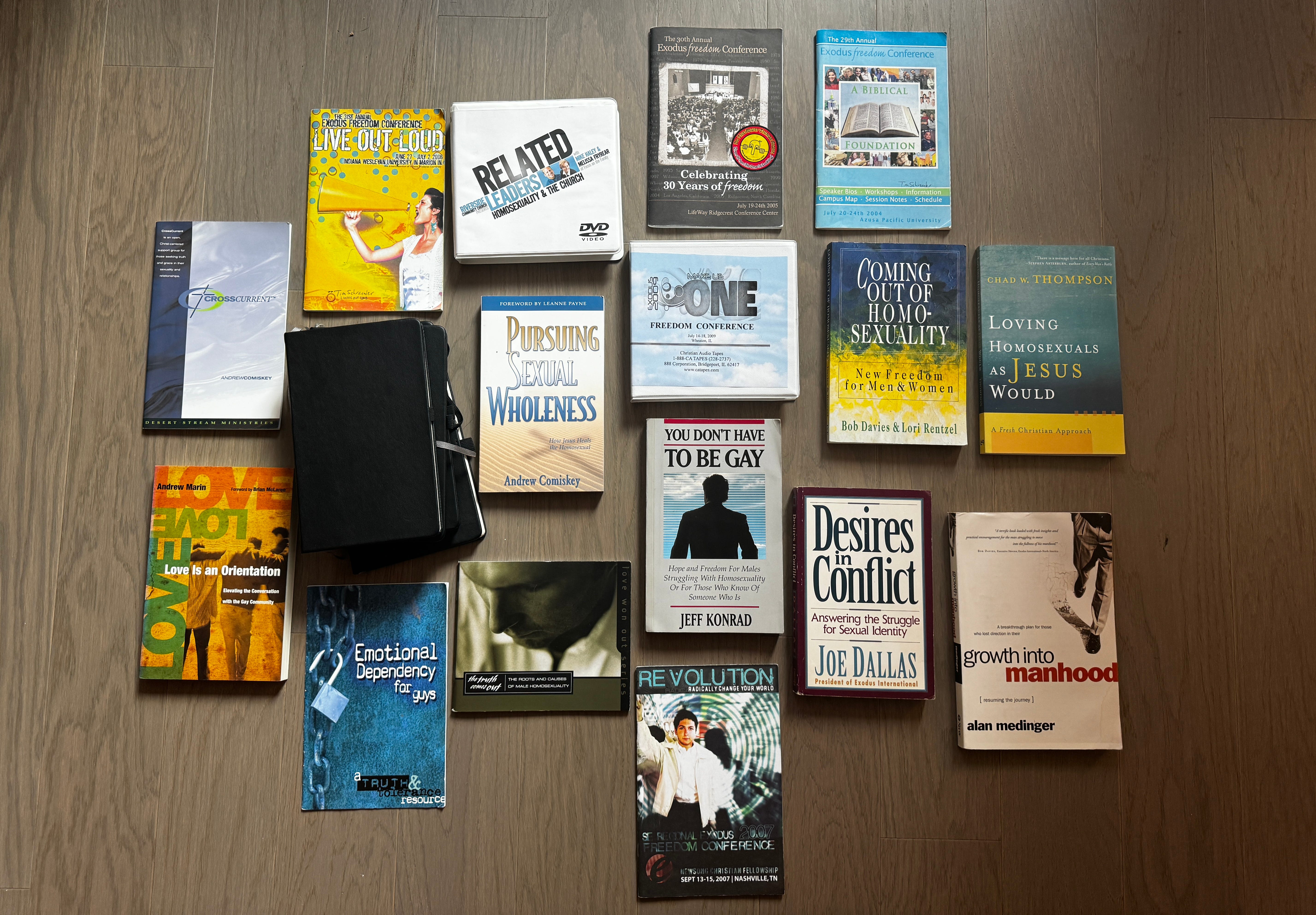
For the last fourteen years, that box has traveled with me across multiple moves from Chicago to NYC and has always been tucked away in a dark corner of my closet. Like Pandora's Box, I knew better than to open it. But, knowing the task ahead of me, I got it out and sifted through its contents for the first time this weekend. The highlights and notes in the margins of these books tell a story of someone trying so hard to find answers, to make sense of their place in the world. I marvel at how earnest I was and how desperately I wanted to believe in the possibility of change. And while there is plenty of room for anger or frustration at the time I lost, I choose compassion for that younger version of myself. Re-reading the notes and journals, I know I was doing the best I could with the information I had. And I was being brave in my own way, facing my fears and grappling with deep questions of identity and faith.
When I walked away from conversion therapy I thought my time working in churches was over, but it was actually just beginning. Over the next seven years, I'd go on to work with some of Evangelical Christianity's most prominent megachurches, including working as a contractor for a short season at Hillsong Church in Sydney, Australia. It's a much longer story that I'll spell out in my book. But it was there I had to make a similarly life-altering decision.
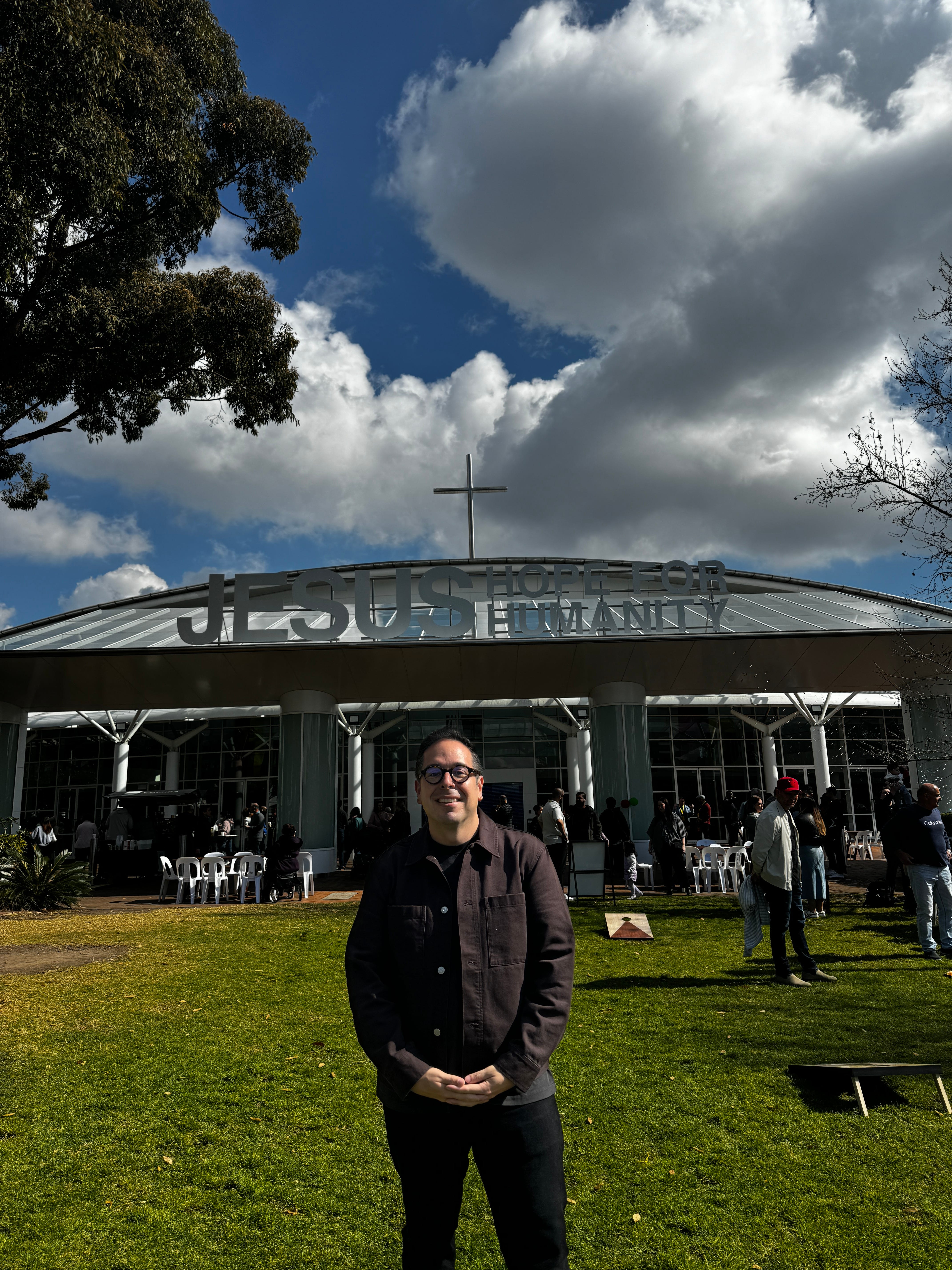
I unexpectedly found myself walking through front doors of Hillsong Church a few Sunday mornings ago. I was in Sydney for work as a part of my new job. The irony of traveling back to Syndey while writing a book in which Hillsong will be a significant chapter is not lost on me. God truly works in mysterious ways.
Being back at Hillsong brought closure I didn't know I needed. While so much has changed there in the last couple of years, everything still seemed the same as it was the last time I was there 11 years ago. Most people I knew back then no longer work at or attend the church. I managed to find someone who did, and she, knowing the weight of what going back there would mean, agreed to go with me. Driving on campus and seeing the futuristic church building and the infamous "JESUS: HOPE FOR HUMANITY" sign brought a flood of emotions I didn't expect. As we found our seats in the auditorium and the music amped up, the only words I could muster were, "I never dreamed I would ever come back here again."
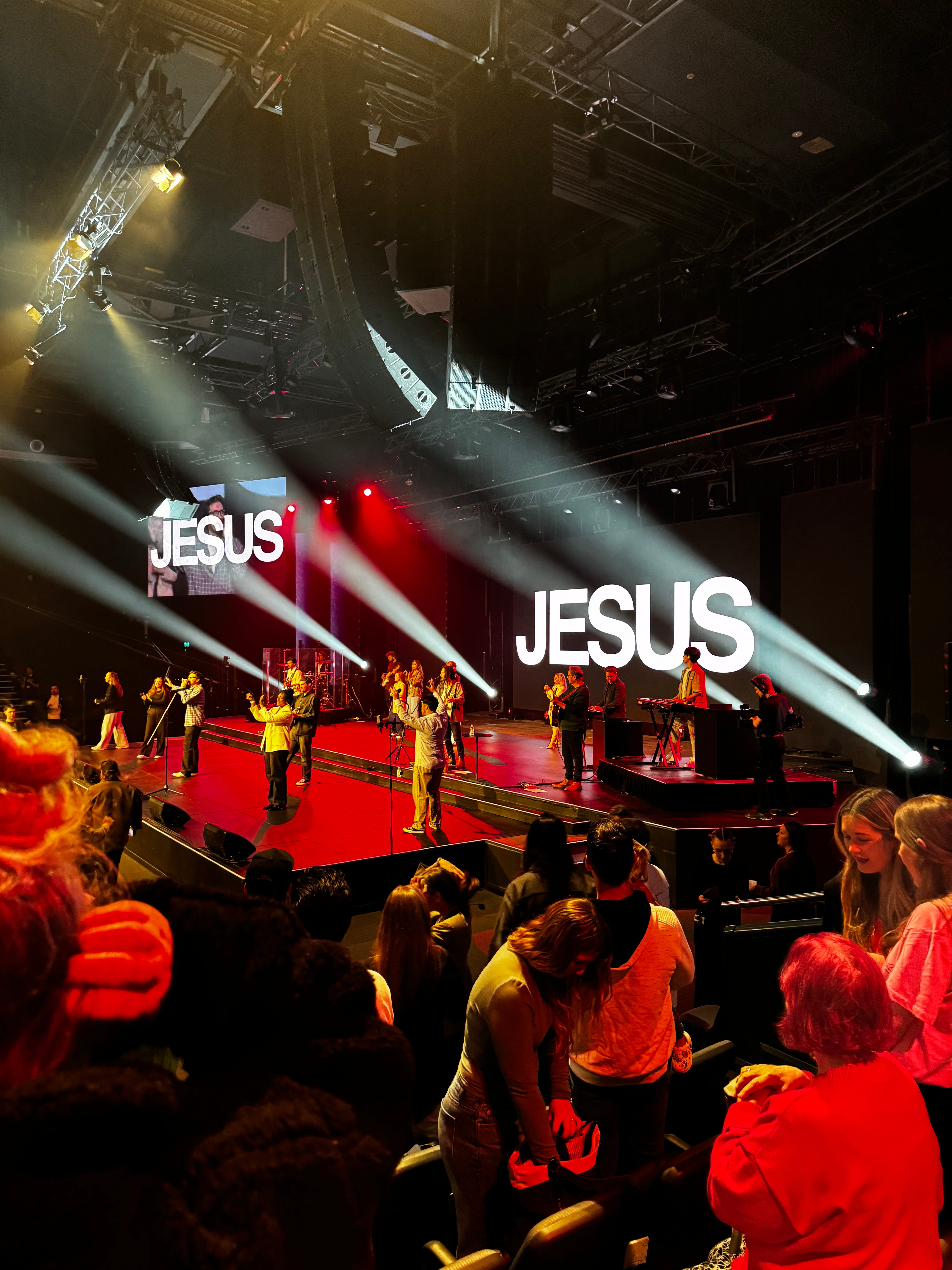
It was a lot to absorb. It all felt so familiar and so foreign. And yet, at one point, I found my hands raised in the air with the rest of the congregation singing songs I'd never heard but whose melodies touched a part of my soul that hadn't stirred in a long time.
Being back in that room, I pictured the 30-year-old version of myself who had left conversion therapy and was fumbling his way forward. Who got to a place he'd always dreamed of being and wondered if God bringing me there was some part of a divine plan I couldn't see to keep me straight. And I marveled at the courage I had back then to stay true to who I knew I was, even if it meant giving up, at the time, what I thought was the opportunity of a lifetime. I left the service with gratitude for the role Hillsong played in my life, but even more so for the strength I had back then to know God had something better for me.
Confronting my past like this has been challenging and cathartic. It's one thing to reflect on these experiences from a distance. It's entirely different to re-engage with the physical remnants and revisit the places that shaped so much of who I am. Writing has forced me to do both.
Revisiting Hillsong and my time in conversion therapy has reminded me just how far I've come—not only geographically but also spiritually and emotionally. I no longer feel like I need to change myself to find love or acceptance—from God or anyone else. I can look at my past with compassion, knowing every step I took, no matter how painful, was part of becoming who I am today.
And even though this isn't easy work, I am doing it to shed light on the experiences so many people have faced in silence. My hope is that sharing my journey can offer a sense of solidarity to anyone who feels lost, struggling with their identity, or wrestling with their faith. We all have our own boxes to open, our own places to revisit, and our own stories to tell. As I continue to unpack my experiences, I'm reminded that our greatest strengths often emerge from our deepest struggles, and that sharing our truths can be the most powerful act of love—for ourselves and for others.
I’m glad you found the courage!